




In December 2025, Northern governors and traditional rulers met in Kaduna to dissect the unbearable state of insecurity in the region. After a long deliberation at the Sir Kashim Ibrahim House, Kaduna, the forum released its communique, which contained a long list of action points. One of the requested measures the forum suggested was a six-month ban on mining activities by the Ministry of Solid Minerals Development.
According to the forum, the attacks on schoolchildren and other citizens had become “unacceptable tragedies” which required “firm response” from the government of the day. “We resolved to renew our support for every step taken by the President and Commander-in-Chief to take the fight to insurgents’ enclaves to end the criminality,” the forum said.

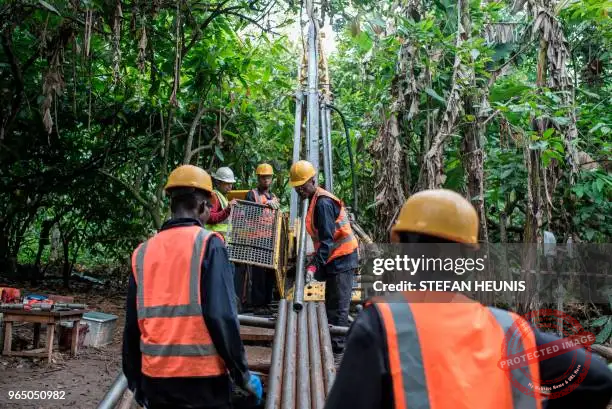
Specifically on illegal mining, the forum said that criminal mining networks have been fuelling violence in the region and that, as a corrective measure, the administration of President Bola Tinubu should direct the Minister of Solid Minerals to impose a six-month suspension on mining activities to allow for proper audit and revalidation of licenses. “The Forum observed that illegal mining has become a major contributory factor to the security crises in Northern Nigeria.
“We strongly recommend a suspension of mining exploration for six months to allow proper audit and to arrest the menace of artisanal illegal mining,” the forum said.
No matter the defence anyone wants to put up in favour of the mining sector as far as its links with criminality are concerned, the sector is guilty as charged. The half-hearted regulatory measure in the sector provides opportunities for operators to arm mining hands and, in the process, enable gun and light weapons to filter into criminal elements who, in turn, wreak havoc on Nigerians in the name of kidnapping, banditry, and terrorism.
The coincidences are just too striking. In Zamfara State, the start of gold mining in commercial volume marked the take off of high velocity crime in that area. Before then, we used to hear of cattle rustling as the major security headache. The rustlers usually come from across the borders, and the Nigerian security system was able to contain that onslaught. With the coming of gold mining in the state, the situation escalated to kidnapping for ransom, banditry, and the rise of organised criminal gangs, including the rise of dreaded bandit, Bello Turji, and others.
In February 2024, reports emanated that a task force set up by the Economic and Financial Crimes Commission (EFCC) and the Nigerian Security and Civil Defence Corps (NSCDC) arrested 41 suspects and 12 truckloads of lithium and other solid minerals in Ilorin, Kwara State. The items were said to have originated from parts of Oyo State. Again, in January 2026, reports indicated that the Ministry of Solid Minerals Development, in collaboration with the Department of State Services (DSS), arrested seven trucks loaded with lithium and assorted solid minerals also in Ilorin. The items equally emanated from parts of Oyo State. On the heels of those reports came the attack by bandits on the Old Oyo National Park office in Oriire local government of Oyo State. You can see how criminality trails illegal (even legal) mining. It emerged that most of the illegally siphoned minerals were mined from the park. That allowed the unwholesome infiltration of the bandits, who have now launched their guns.
But mining is not necessarily associated with such pains as banditry and crime in other lands. According to available records, the top five countries ranking in tens of billions from mining in the world include China, the United States of America, Russia, Australia, and India. In that order. China, which produces five billion tons of minerals from Rare earths (69.2%), lithium, graphite, cobalt, and magnesium rakes in over $30 billion from Rare earths and coal alone, while the US with 2.3 billion tons of minerals comprising huge deposits of Copper, gold, silver, platinum, lithium, and molybdenum is reported to have started generating at least $109.6 billion annually from 2015. Russia, on the other hand, produces 1.6 billion tons of minerals and recently raked in $216 billion as a result of a gold windfall. As of 2020, Australia’s 1.3 billion tons of minerals contribute 10.4 per cent of its GDP and bring in $270 billion into its economy. India, with 1.2 billion mineral productions, equally rakes in billion dollars annually from the sector. In comparison, Nigeria has only just started earning some benefits from its mineral resources at the national level. Before now, as soon as the miners secured their licences legally or illegally from Abuja, they locate the sites and disappear from the radar of the supervising ministry.
Reports indicated that Nigeria, with over 40 commercially viable solid minerals, including gold, lithium, tin, niobium, coal, and rare earth elements, reported a 337% revenue increase in the sector when its earnings surged from ₦16 billion in 2023 to ₦38 billion in 2024. The earnings were expected to go above N70 billion in 2025. Despite the heroics of galloping income, it is clear that the country only earned a paltry $49 million from the sector when the earnings are converted to US Dollars. This is an infinitesimal amount when compared to the billions earned by the top five mining countries. But do these countries with huge pay from mining also face the kind of nefarious acts that mining has imposed on Nigeria? There is no such evidence. In China, there are reports of Illicit rare earth mining, environmental degradation, and human rights abuses. The United States also reports issues around Illegal mining, environmental damage, and labour exploitation, while Russia reports organized crime involvement, corruption, and environmental degradation. In Australia, there were reports of environmental vandalism, tax evasion, and indigenous land rights issues, and in India, issues of illegal mining, corruption, and environmental destruction have been reported. Globally, mining has been linked to conflicts with communities, human trafficking, corruption, money laundering, environmental pollution, and deforestation. Nowhere in the top mining countries have we heard about banditry, terrorism, and kidnapping, as we’ve seen in Nigeria in recent years. So, why is mining a curse rather than a blessing here? The answers are not that far-fetched. The supervising ministry has a lot to share in the blame. Even when there are reports that the ministry is stepping up its efforts in recent times, the toll on the people is heavier than the gains. Why is the type of supervision and metering applied in the oil sector missing in mining? Even though we have issues of stolen crude (something I don’t find justifiable anyway) in that sector, at least there is an attempt at accountability.
The resource curse is evident everywhere in the Nigerian mining sector. Rather than orchestrate accelerated development, mining in the country has generated underdevelopment, crimes, inequality, and conflict. Illegal mining has been the source of major crimes in states like Zamfara, Nasarawa, and now Kwara and Oyo. There are pockets of criminal activities in Osun State as well, with banditry, kidnappings, and arms trafficking threatening the peace of the people. Besides banditry, rising criminal networks, and exacerbating violence, there are also indications that communities are being displaced, while environmental damage, deforestation, water pollution, and lead poisoning have been experienced in parts of the country. Environmental and health risks from unregulated mining often bypass benefits, and the boldness with which the elite are flaunting their illegal mining skills is staggering. There are reports that most of the gold and minerals mined in Zamfara and other states are often transported through the private wings of the airports in Kano, Abuja, and Lagos. The country is the poorer for that. But recent interceptions in Kwara and Oyo States could serve as a pointer towards efforts aimed at stalling the massive resource theft that has characterised the sector.
News from this sector has not been all doom, though. Reports are indicating that the sector’s contribution to Gross Domestic Product (GDP) has markedly improved, especially from the second quarter of 2025, when it reached approximately 4.6 per cent, rising from less than 0.5% a decade earlier. Even though there is no uniformity in the figures in circulation, as some reports cite around 1.8% overall contribution, increased regulation in the sector could boost revenue further and also enhance the nation’s capacity to diversify its oil-reliant economy. Recent announcement of the commissioning of a high-purity gold refining plant in Lagos (a private initiative) and the upcoming $600 million lithium processing plant in Nasarawa State are key developments that could write off some of the burdens mining activities have imposed on Nigeria.
With improved technology, security crackdowns like empowerment of Mining Marshals and value-addition, the sector, which employs a lot of local hands, can fast-track the push to end illegal operations and mitigate the resource curse. Therefore, to turn the resource curse into a blessing, the country must adopt a zero-tolerance policy on illegality, prioritize community benefits, invest in sustainable practices, and accelerate value chains. If the Ministry of Solid Minerals were to sustain the gains of 2025 by implementing transformative procedures, mining could just emerge as one sector that would drive inclusive growth in the country and shift the people away from the agonising era to that of economic boom.
You can get every of our news as soon as they drop on WhatsApp ...To get all news updates, Join our WhatsApp Group (Click Here)